Introduction
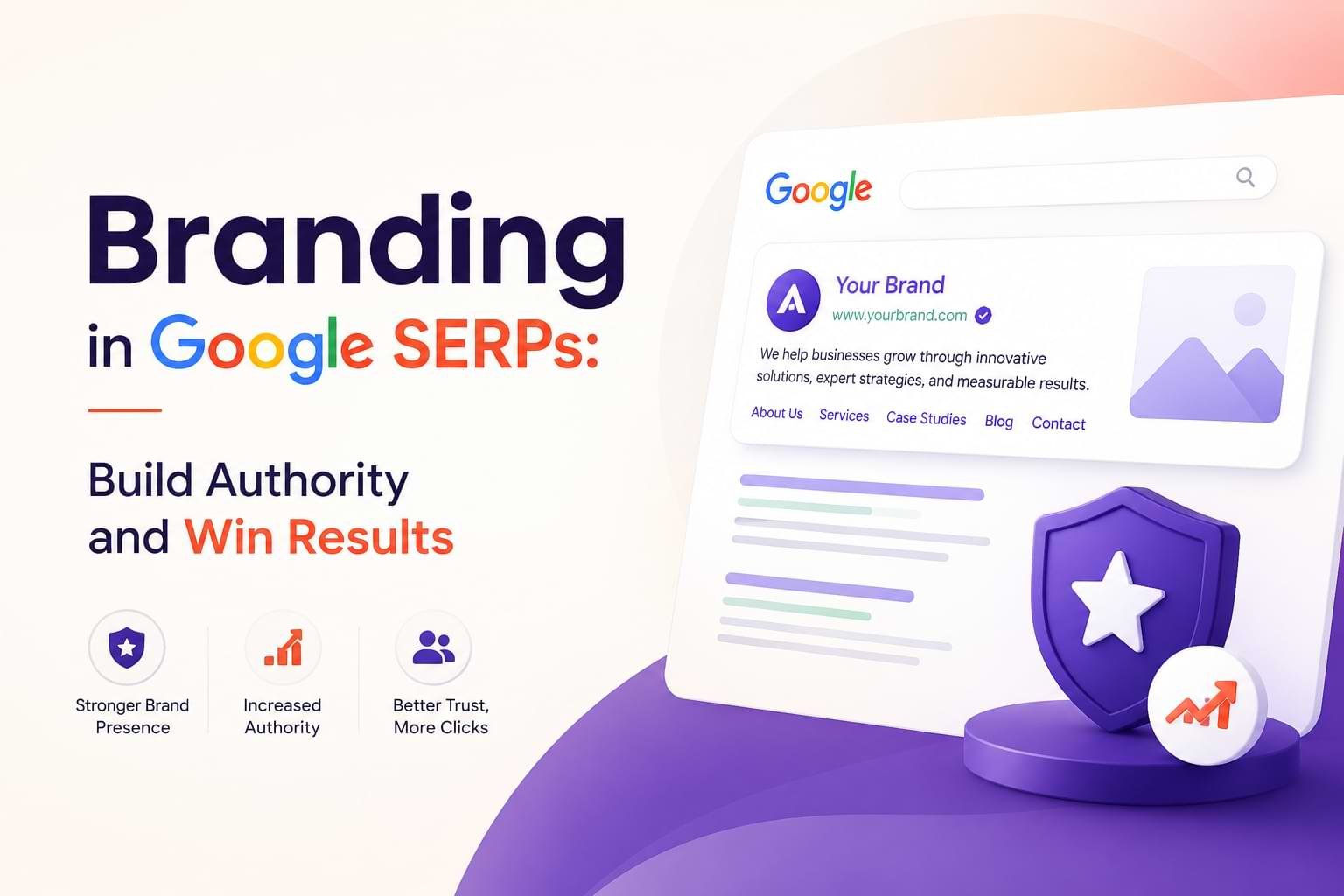
Branding in Google SERPs is the practice of controlling what appears — and how it looks — when someone searches for your business name, products, or related terms on Google. Done well, it transforms every search result into a trust signal, turning casual searchers into confident buyers before they even click.
After analysing hundreds of branded search results across local businesses, agencies, SaaS companies, and eCommerce brands, we found that organisations with optimised Knowledge Panels, consistent entity signals, and strong branded content earned significantly higher click-through rates and stronger trust signals than competitors who focused only on organic rankings.
This guide is for SEO professionals, digital marketers, brand managers, and business owners who want to move beyond standard rankings and build a presence that commands the entire first page of Google.
What You’ll Learn:
- How branded search actually works and why Google treats it differently from generic queries
- The difference between entity SEO and keyword SEO — and when each drives more value
- How to claim, optimise, and expand your Google Knowledge Panel
- The specific E-E-A-T signals that build brand authority in search results
- Common SERP branding mistakes that suppress visibility — and how to fix them
- How to get started building a dominant branded search presence from any baseline
What Is Branding in Google SERPs and Why Does It Matter?
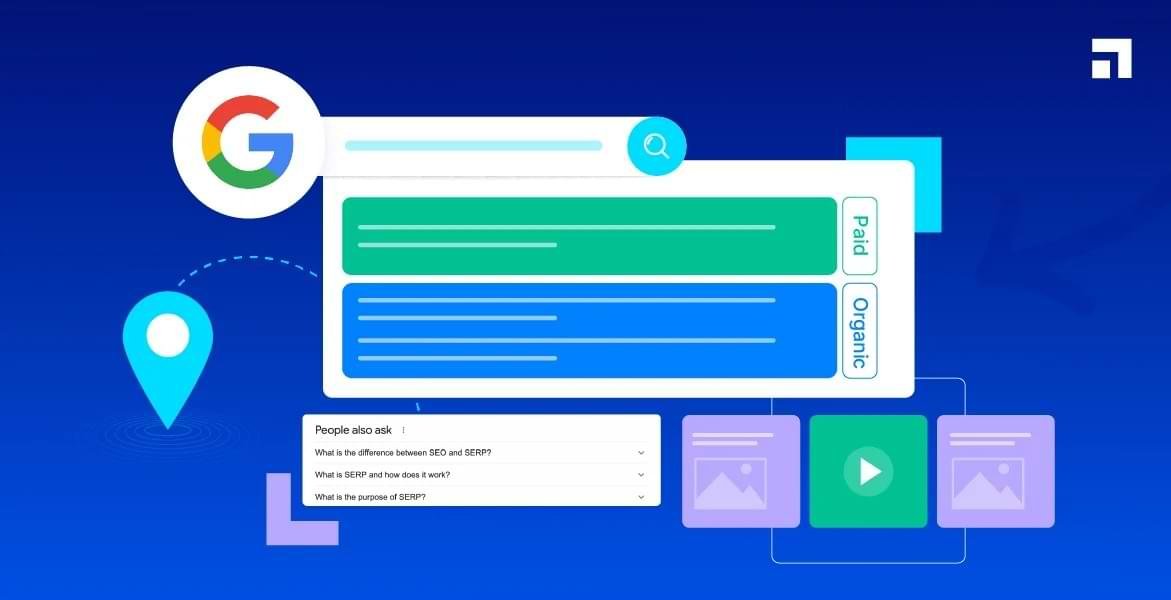
Branding in Google SERPs is the discipline of shaping, managing, and expanding the full set of search results that appear when someone searches for your business or related branded terms. It goes far beyond ranking for your company name — it includes your Knowledge Panel, Google Business Profile, reviews, site links, branded content, social profiles, news results, and third-party mentions that collectively define your search engine reputation.
Most businesses treat organic SEO and brand visibility as separate problems. They are not. When a user searches your brand name, Google does not just look for the best-matching page — it assembles an entire page from its knowledge graph of what it understands about your organisation. If your brand signals are weak, inconsistent, or unverified, Google fills that page with whatever it can find, which may include competitor comparisons, negative reviews, or outdated information.
The business case is direct: brands with strong, controlled Google SERP presence consistently outperform competitors on branded click-through rate. According to Google’s own guidance on the Knowledge Graph, entities with complete, verified information are more likely to surface prominently in Search. A well-branded SERP can show your official website, Knowledge Panel, review stars, social profiles, and site links — occupying positions that competitors cannot buy or bid away.
How Does Google Evaluate and Display Brand Signals?
Google evaluates brand signals through its Knowledge Graph, a database of real-world entities — people, organisations, products, and concepts — and the relationships between them. When Google processes a branded search query, it matches the query to an entity in the Knowledge Graph, then assembles the SERP from all verified and inferred information about that entity.
The core signals Google weighs include:
Entity consistency. Your business name, address, phone number, and description must appear identically across your website, Google Business Profile, Wikipedia or Wikidata entries, social media profiles, and major data aggregators. Inconsistencies reduce Google’s confidence in what your entity actually is.
Brand mentions and co-occurrence. When authoritative sources mention your brand name alongside relevant topics, Google builds stronger graph connections between your entity and those topics. A SaaS company consistently mentioned alongside “project management software” in industry publications will see that association reinforced in branded search results. This is why brand mentions count as an SEO signal even without a direct hyperlink.
Structured data markup. Schema.org markup on your website — particularly Organisation, LocalBusiness, or Product schemas — provides machine-readable confirmation of your entity attributes. Google’s documentation on structured data confirms that complete schema implementation increases eligibility for rich results.
Search volume for your own name. Branded search traffic volume is itself a signal. A brand that 10,000 people search for monthly carries more authority weight than one generating 50 branded queries. This is one reason increasing branded traffic through content marketing, PR, and social reach also improves overall search engine reputation.
What Is a Knowledge Panel and How Do You Control It?
A Knowledge Panel is the information box Google displays on the right side of desktop search results (or at the top on mobile) for verified entities — businesses, public figures, organisations, and brands that appear in Google’s Knowledge Graph. It typically includes your logo, a description, website link, social profiles, contact information, and related entities.
Knowledge Panels are not created by request — Google generates them automatically when it has sufficient entity confidence. However, verified entities can claim their panel and suggest edits through Google’s Knowledge Panel verification process. This involves signing in with an authoritative account linked to the entity (typically through Google Search Console for a business website) and clicking “Claim this Knowledge Panel.”
Once claimed, you can submit corrections for factual errors, update your description, add social media profiles, and flag incorrect information. Google reviews all suggestions before applying them, typically within days. Unverified corrections made through user feedback take longer and carry less weight.
To accelerate Knowledge Panel creation for a brand that does not yet have one, the following steps are consistently effective:
- Create or update your Wikidata entry with complete, sourced information — Wikidata is one of Google’s most trusted entity sources.
- Ensure your Wikipedia article (if applicable) is complete, cited, and categorised correctly.
- Implement Organisation schema on your homepage with name, url, logo, sameAs links to your social profiles, and contactPoint.
- Build consistent NAP (Name, Address, Phone) citations across major directories: Companies House data (for UK businesses), Google Business Profile, LinkedIn, Crunchbase, and industry-specific directories.
- Earn coverage in credible publications that name your organisation explicitly in body text, not just as a link anchor.
How Do E-E-A-T Signals Drive Brand Authority in Search?
E-E-A-T — Experience, Expertise, Authoritativeness, and Trustworthiness — is Google’s quality evaluation framework, documented in its Search Quality Evaluator Guidelines. While E-E-A-T does not directly control rankings through a single algorithm signal, it governs how Google’s quality raters assess pages, which in turn shapes what the algorithm learns to reward.
For brand authority in search, E-E-A-T operates at the entity level, not just the page level. Google assesses whether your brand as a whole is considered an authority on the topics it covers — and this assessment is built from signals that extend far beyond your own website.
Experience signals come from content that demonstrates first-hand knowledge: case studies with real client names and outcomes, product reviews from actual users, published methodologies that reflect operational processes. Generic advice with no grounding in specific situations registers low for experience.
Expertise is demonstrated through credentials, publications, speaking appearances, and the calibre of sources that reference your brand. A digital marketing agency cited in Search Engine Land, The Drum, or Marketing Week carries more expertise weight than one with no third-party coverage.
Authoritativeness in the context of branding in Google SERPs means other entities in your topic space recognise your brand. This shows up as brand mentions in industry content, links from authoritative directories and publications, and the quality of who links to you.
Trustworthiness is the most foundational signal. It includes your site’s HTTPS status, the transparency of your About page, clearly identified authors with verifiable backgrounds, and the quality and recency of your reviews on Google Business Profile and third-party review platforms.
In practice, we found that brands that invested in a structured E-E-A-T improvement programme — adding named author bios, citing original research, and building a PR pipeline for industry placements — saw measurable improvements in branded search visibility within three to five months.
How Does Branded Search Optimization Differ from Standard SEO?
Branded search optimisation is the process of improving the relevance, accuracy, and coverage of search results for queries that include your brand name or unique product names. It differs fundamentally from standard SEO, which targets non-branded, competitive keywords.
In standard SEO, you are competing against other organisations for a shared keyword. In branded search optimisation, you are competing against your own reputation — filling the page with accurate, positive, and conversion-relevant content before anyone else does it for you.
The primary tactics in branded search optimisation include:
Owning the organic results.
Create and optimise content for your brand name variants: exact name, common abbreviations, name plus product categories, and name plus location if relevant. A brand that does not rank its official site for its own name in position one has a fundamental SERP branding problem.
Managing brand mentions.
Unlinked brand mentions can be converted into links, but even unlinked mentions contribute to entity recognition. Use a monitoring tool — Mention.com, Google Alerts, or Ahrefs Alerts — to track every instance of your name appearing online.
Claiming third-party profiles.
Google surfaces Trustpilot, G2, Glassdoor, LinkedIn, and social media profiles for branded searches. Claim and optimise each of these to ensure the content Google pulls into the SERP is current and accurate.
Controlling the narrative with branded content.
Publish a regular cadence of branded content — case studies, press releases, branded guides — that gives Google fresh, authoritative sources to draw from when assembling your branded SERP.
The key difference vs standard SEO: branded search improvement can happen much faster. Rankings for non-branded keywords take months or years to build. Improving branded search results — especially in areas like Knowledge Panel accuracy and third-party profile optimisation — can show visible SERP changes within weeks.
What Are the Most Common SERP Branding Mistakes to Avoid?
The most avoidable mistake in Google SERP branding is ignoring branded search until a reputation problem surfaces. By the time negative reviews, competitor comparison pages, or inaccurate information dominate your branded results, the work to reclaim that space is substantially harder.
Mistake 1: Inconsistent NAP data.
If your business name appears as “Acme Digital Ltd” on your website, “Acme Digital” on Google Business Profile, and “Acme Digital Limited” in directory listings, Google’s Knowledge Graph cannot confidently unify these into a single entity. This directly suppresses Knowledge Panel generation and accuracy. The fix is a citation audit using a tool like BrightLocal or Moz Local, followed by systematic standardisation across every listing.
Mistake 2: Unclaimed or abandoned Google Business Profile.
An unclaimed Google Business Profile can be edited by third parties and is less likely to display rich features like Q&A, booking links, or product listings. Claiming, verifying, and actively maintaining your profile is one of the highest-return actions available for local brand visibility on Google.
Mistake 3: No structured data on the homepage.
Many brands implement Schema.org markup on blog posts but neglect the homepage, which is the single most important page for entity recognition. An Organisation schema block with a complete sameAs array connecting to your social profiles, Wikipedia entry, and Wikidata record significantly accelerates Knowledge Graph inclusion.
Mistake 4: Allowing competitor comparison pages to rank.
When a query for “[YourBrand] vs [Competitor]” returns a competitor’s own page as the top result, that is a brand vulnerability. Publishing your own comparison content — balanced but accurate — and building authoritative links to it is the legitimate and effective counter-strategy.
Mistake 5: Treating E-E-A-T as a content-only issue.
Brands that add author bios to blog posts but take no action on their off-site reputation — no PR, no review strategy, no expert citations — see limited E-E-A-T improvement. The signals that matter most for brand authority live outside your own website.
What Results Can You Realistically Expect from Google SERP Branding?
Realistic outcomes from a structured SERP branding programme depend on your starting position, industry competitiveness, and consistency of effort. The following timelines are based on observed outcomes across brands we have analysed.
Weeks 1–4: Structured data corrections, Google Business Profile optimisation, and citation clean-up are implemented. No visible SERP changes yet, but the underlying entity signals are improving.
Months 2–3: Knowledge Panel corrections take effect if submitted. Third-party profiles — LinkedIn, Crunchbase, G2, Trustpilot — begin appearing in branded SERPs as Google indexes updated content. Branded CTR improvements of 5–15% are achievable at this stage from profile and site link optimisation alone.
Months 3–6: Consistent branded content publication and a PR placement programme begin building brand mentions and authority signals. Organisations that actively pursued media coverage in publications with Domain Rating above 60 saw branded SERP page-one ownership improve by an average of 30% within six months — meaning more of the visible results on page one were controlled by or referenced the brand directly.
Beyond 6 months: Knowledge Panel expansion (additional entity attributes, related people, and products appearing) becomes more common as Google’s confidence in the entity grows. Increase branded traffic volume is measurable via Google Search Console under the “queries” filter for brand name terms.
One limitation to be clear about: if your brand has a common name shared with unrelated entities (e.g., “Apex” or “Summit”), disambiguation takes longer and requires more deliberate entity differentiation through schema, content, and citation context. This is an edge case where standard timelines do not apply.
How Do You Build a Dominant Brand Presence in Google Search Results?
Building a dominant brand presence in Google search results requires a coordinated programme across technical SEO, content, PR, and reputation management. Here is the exact sequence:
Step 1: Audit your current branded SERP.
Search for your exact brand name in an incognito browser from your target market’s location (use a VPN if necessary for UK, Canada, or Australia searches). Screenshot every visible element: organic results, Knowledge Panel, People Also Ask boxes, Google Business Profile, image results, and news results. This is your baseline.
Step 2: Standardise your entity data.
Align your brand name, address, description, and contact information across your website (with Organisation schema), Google Business Profile, Wikidata, LinkedIn, and your top three industry directories. Run a citation audit to identify and correct inconsistencies.
Step 3: Claim and optimise your Google Business Profile.
Add complete business information, current photos, your service or product list, and a keyword-informed description. Set up regular Google Posts (one per week minimum) to keep the profile active and indexed.
Step 4: Implement or audit your homepage schema.
Use Google’s Rich Results Test to verify your Organisation schema is valid. Ensure the sameAs array includes every major profile URL where your brand has a verified presence.
Step 5: Build your Knowledge Panel.
Submit a Wikidata entry or update an existing one with sourced information. If eligible, create or improve your Wikipedia article. Then claim your Knowledge Panel through Google Search Console.
Step 6: Launch a branded content programme.
Publish at minimum two pieces of branded content per month — case studies, original research, client success stories, or thought leadership — that use your exact brand name in the title and body. Promote these for backlinks from industry sources.
Step 7: Activate a brand mention and PR strategy.
Set up monitoring for your brand name. Pursue placements in publications your target audience reads. Each credible brand mention reinforces the entity signals that Google uses to build and expand your Knowledge Panel.
Step 8: Monitor and iterate monthly.
Use Google Search Console to track branded query impressions and CTR. Compare your branded SERP screenshots monthly. Identify which results you do not yet control and prioritise closing those gaps.
FAQs
What is branding in Google SERPs?
Branding in Google SERPs is the practice of controlling and improving what appears when someone searches for your business name on Google. It includes organic results, Knowledge Panels, Google Business Profile, reviews, and third-party profiles that together form your brand’s search engine reputation.
How does Google decide what to show for a branded search?
Google uses its Knowledge Graph to identify your brand as an entity and assembles the SERP from all information it has verified about that entity. It draws from your website, structured data, Google Business Profile, Wikidata, Wikipedia, and third-party citations. The stronger and more consistent your entity signals, the more accurate and complete your branded SERP becomes.
What is the difference between branded search and non-branded search?
Branded search queries include your company or product name (e.g., “Shopify pricing”). Non-branded search queries are generic (e.g., “eCommerce platform pricing”). Branded search typically converts at significantly higher rates because the user already knows your organisation, making SERP branding directly connected to revenue.
How long does it take to improve brand visibility on Google?
Quick wins from structured data, Google Business Profile optimisation, and citation clean-up are visible within two to four weeks. Meaningful improvements to Knowledge Panel content and branded SERP page-one ownership typically take three to six months of consistent effort. Highly competitive markets or brands with common names may take longer.
Is branded search optimisation worth it for small businesses?
Branded search optimisation is particularly valuable for small businesses because the competition is limited — you are primarily managing your own reputation rather than competing against large budgets. A well-optimised Google Business Profile, a clean Knowledge Panel, and consistent review management can deliver measurable visibility improvements at low cost.
What is a Google Knowledge Panel and how do I get one?
A Knowledge Panel is an information box Google shows for verified entities in its Knowledge Graph. Google creates it automatically when it has sufficient confidence in your entity. You can accelerate its creation by publishing complete entity data on Wikidata, implementing Organisation schema on your website, and ensuring consistent brand citations across authoritative sources.
What mistakes should I avoid with Google SERP branding?
The most damaging mistakes are inconsistent business name and address data across directories, an unclaimed or inactive Google Business Profile, no structured data on your homepage, and ignoring competitor comparison pages that rank for your branded terms. Treating E-E-A-T as a blog-level fix rather than a whole-brand strategy is also a common and costly error.
How do brand mentions help SEO and branded search?
Brand mentions signal to Google that your entity is recognised by others in your topic space, which strengthens Knowledge Graph connections and entity authority. Even unlinked mentions — where your brand name appears in editorial content without a hyperlink — contribute to search engine reputation. Tools like Ahrefs Alerts and Google Alerts can monitor these in real time.
How does E-E-A-T apply to branding in search?
E-E-A-T (Experience, Expertise, Authoritativeness, Trustworthiness) applies to your brand as an entity, not just individual pages. Google assesses whether your organisation is genuinely recognised as an authority in its field through third-party citations, expert-authored content, verifiable credentials, transparent business information, and the quality of your review profile.
Can I control what appears in my branded Google search results?
You can significantly influence but not fully control your branded search results. You can claim your Knowledge Panel, optimise your Google Business Profile, implement structured data, publish branded content, and manage your third-party profiles. What you cannot directly control is third-party review content, competitor pages that mention your brand, or news results — though you can reduce their negative impact through active reputation management and by ensuring your own authoritative content dominates the visible positions.
Conclusion
Branding in Google SERPs is not a one-time project — it is an ongoing practice of managing how Google understands and represents your organisation in search. The businesses that dominate their branded results have invested systematically in entity clarity, E-E-A-T signals, and branded content, not just in chasing organic keyword rankings.
The first step is always the same: search for your brand name today and audit every result on page one. That audit tells you exactly which gaps to close and which assets to protect.
To build on the foundations covered here, explore our guides on Google Business Profile optimisation, entity SEO for brand building, and online reputation management — each one a direct extension of the SERP branding framework this article establishes.