Quick Answer
A full water heater replacement typically costs $1,200 to $4,500 installed in 2026, depending on whether you’re doing a like-for-like tank swap or upgrading to tankless, plus your local labor rates. When you search “water heater replacement near me,” don’t just compare quotes — confirm each contractor is licensed and insured, ask whether the quote includes a permit (most jurisdictions require one), and get the price in writing before work starts. A licensed local plumber, not the lowest bidder, protects you if something goes wrong later.
What Water Heater Replacement Actually Costs in 2026?
Pricing varies more than most homeowners expect, largely because of unit type, fuel source, and regional labor rates. Based on current 2026 industry data:
| Unit type | Installed cost (2026) | Typical lifespan |
|---|---|---|
| 40-gallon gas tank | $1,400 – $2,500 | 10–13 years |
| 50-gallon gas tank | $1,600 – $2,800 | 10–13 years |
| 50-gallon electric tank | $1,200 – $2,200 | 10–15 years |
| Tankless gas (199K BTU) | $3,000 – $5,500 | 18–22 years |
| Tankless electric (27 kW) | $2,000 – $4,000 (often + panel upgrade) | 15–20 years |
| Heat pump water heater (50–80 gal) | $2,500 – $4,500 | 13–15 years |
Source: PermitDeck 2026 cost breakdown.
For a simple, same-type, same-location swap, HomeBuddy’s 2026 pricing guide puts the national range at $1,900 to $9,000, while Angi’s 2026 data shows a tighter typical range of $881 to $1,826 with an average around $1,346 for straightforward jobs.
The spread between these figures comes down to fuel type, unit size, and whether any code upgrades are needed — which is exactly why getting a written, itemized local quote matters more than trusting a single national number.
One pricing detail worth knowing before you call anyone: the federal 25C tax credit that previously gave homeowners 30% back (capped at $2,000 per year) on a qualifying heat pump water heater ended under the One Big Beautiful Bill Act, signed July 4, 2025.
Units placed in service after December 31, 2025, no longer qualify for that federal credit, according to IRS guidance issued in late 2025. If a contractor is quoting you a price that assumes that credit still applies, ask them directly — it’s a common outdated assumption.
When to Replace vs. Repair?
Plumbing industry guidance from Plumbing Sniper’s 2026 data offers a clear rule of thumb:
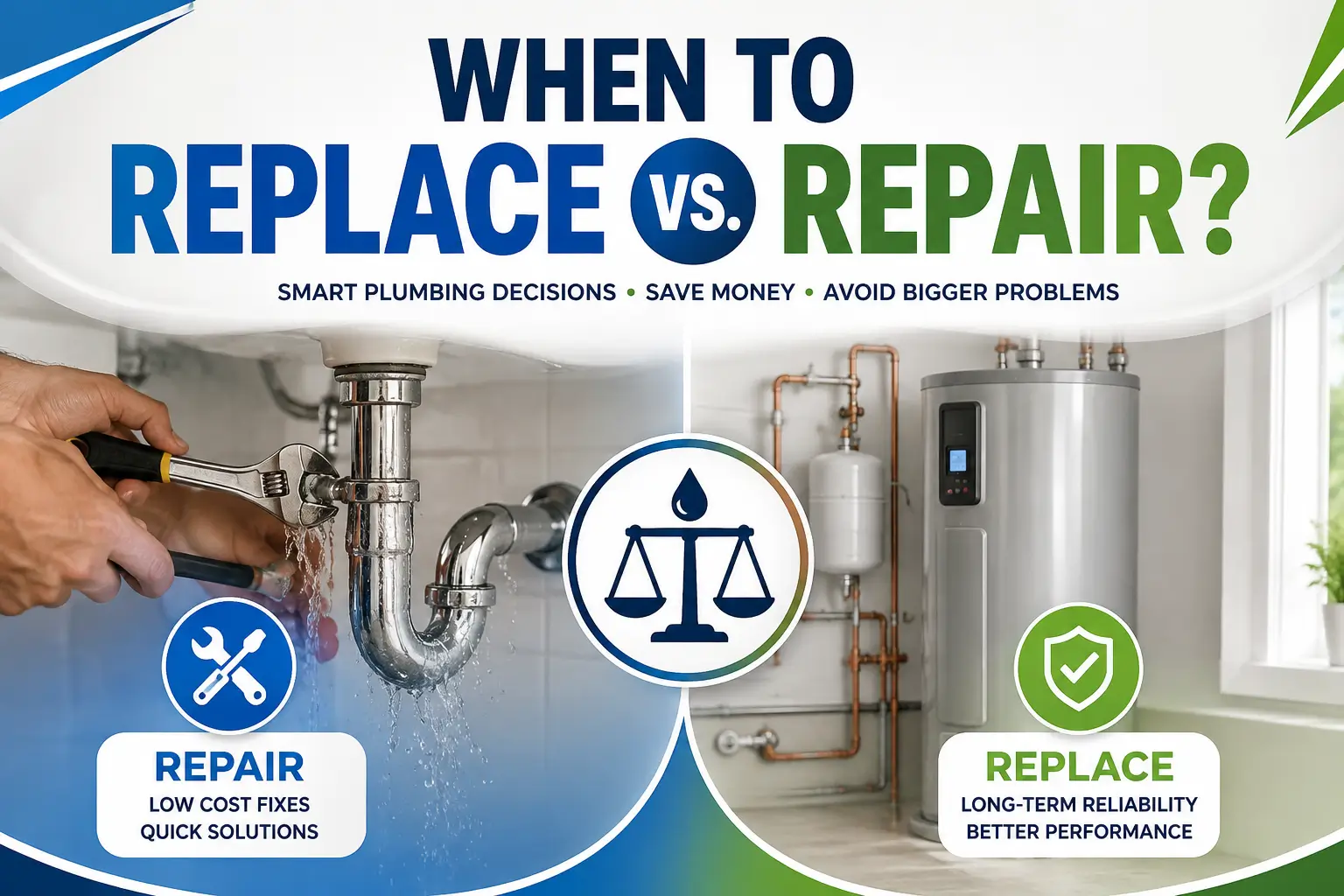
Replace if the repair cost exceeds 50% of what a new unit would cost installed. A general age guideline follows the same logic — tank units typically warrant replacement consideration around 8+ years old, and tankless units around 15+ years old, since repair costs compound quickly as components age and efficiency drops.
Signs it’s time to search “water heater replacement near me” rather than call for a repair:
- Discolored or rusty water coming from hot taps
- Visible leaking from the tank body itself (not a fitting) — this means the tank is cracked and cannot be repaired
- Strange rumbling or popping noises, usually sediment buildup
- A noticeable, unexplained rise in utility bills
- The unit is at or past the upper end of its expected lifespan for its type
How to Vet a Local Water Heater Contractor?
Finding “water heater replacement near me” results is easy. Knowing which one to trust is the actual problem homeowners run into. Use this process:
1. Confirm licensing and insurance before anything else
This job involves gas lines or electrical connections and code compliance in nearly every jurisdiction. Installing without a licensed plumber and the required permit can void your unit’s warranty and, in some cases, your homeowners insurance.
2. Get the quote itemized, not just a total
A trustworthy quote separates the unit cost, labor, permit fee, and any code-required upgrades (venting, electrical, drain pan). If a quote is a single lump number with no breakdown, ask for the itemization directly.
3. Compare at least two to three local quotes
Regional labor rates vary significantly even within the same metro area. A same-size gas tank swap can cost meaningfully different amounts depending on what a given contractor charges per hour and local permit fees — not the equipment itself.
4. Check how the business shows up across search, not just one review site
A contractor’s Google Business Profile rating, their standing on the Better Business Bureau, and how consistently their business name, address, and phone number appear across the web are all signals of legitimacy. This is the same evaluation approach used in local SEO work — a business with clean, consistent listings and a well-managed online reputation is generally a business that treats its operations with the same level of care.
5. Ask directly about the permit
If a contractor tells you a permit “isn’t necessary,” treat that as a red flag rather than a convenience. Skipping a required permit can leave you unprotected if the installation fails or if you sell the home later and it comes up in inspection.
Tank vs. Tankless: Which Fits a “Replacement” Decision Best
| Factor | Tank Water Heater | Tankless Water Heater |
|---|---|---|
| Upfront installed cost | Lower ($1,200–$2,800 typical) | Higher ($2,000–$5,500 typical) |
| Lifespan | 10–15 years | 15–22 years |
| Best for | Homeowners planning to move within 5–7 years, or needing a fast like-for-like swap | Homeowners staying long-term who want lower energy bills over time |
| Installation complexity | Lower, especially for like-for-like swaps | Higher — often needs venting or electrical upgrades |
| Space required | Full tank footprint | Compact, wall-mounted |
According to 2026 industry cost analysis from All Better, a tankless system typically costs $800 to $3,800 more upfront but saves roughly $100 to $200 a year in energy and lasts nearly twice as long — so for homeowners staying in a home seven or more years,
The total cost of ownership tends to favor tankless, while a fast tank swap remains the more practical choice for anyone who needs hot water back immediately and wants to minimize install complexity.
Common Mistakes Homeowners Make When Searching “Near Me”!
- Hiring based on price alone. The cheapest quote often excludes permit fees or code-required upgrades that get added later as “surprises.”
- Skipping the permit to save money. This is the single most common corner-cutting mistake, and it’s the one most likely to cause problems at resale or with insurance claims.
- Assuming all “near me” map results are equally verified. Map ranking reflects relevance and proximity signals, not licensing status or workmanship quality — always verify licensing independently.
- Not asking about warranty coverage on labor, not just the unit. Manufacturer warranties typically cover the unit itself; installation workmanship warranties come from the contractor and vary widely.
- Waiting for total failure instead of watching for warning signs. A proactive replacement, planned on your schedule, is almost always cheaper and less disruptive than an emergency one after a flood.
Key Takeaways
- Expect $1,200–$4,500 installed for most 2026 water heater replacements, with tankless systems running higher upfront but lasting longer.
- Use the 50% rule: if repair costs exceed half of a new unit’s installed price, replace instead of repairing.
- The federal 25C tax credit for heat pump water heaters no longer applies to units installed after December 31, 2025 — confirm any quote reflects that.
- Vet contractors on licensing, itemized quotes, and consistent online presence — not just the lowest number on the page.
FAQs
Is it worth replacing a water heater before it fully fails?
Yes, in most cases. A proactive replacement lets you compare quotes, choose the right unit for your household size, and schedule the work — an emergency replacement after a tank fails often means water damage, a rushed decision, and paying whatever the first available contractor quotes.
How is water heater replacement different from a repair?
A repair addresses a single component (heating element, thermostat, anode rod) and typically costs a few hundred dollars. A replacement swaps the entire unit and involves labor, a permit in most areas, and sometimes code-required upgrades — which is why the cost difference is significant.
Do I really need a permit for a water heater replacement?
In most U.S. jurisdictions, yes. It is not recommended to skip one — the job typically involves gas or electrical connections and code compliance, and doing it without a permit can void both the unit’s warranty and your homeowners insurance coverage.
Tank or tankless — which is actually better value?
It depends on how long you’ll stay in the home. Tankless systems cost more upfront but last nearly twice as long and save on energy costs over time, which tends to favor homeowners planning to stay seven-plus years. A standard tank remains the more practical, lower-cost option for a fast, simple swap.
Why did my water heater quotes vary so much between contractors?
Labor rates, permit fees, and whether the quote includes code-required upgrades (like updated venting or a drain pan) account for most of the spread — not the unit price itself, which tends to be fairly consistent across contractors in the same market.
What’s a realistic timeline for a water heater replacement?
A straightforward like-for-like swap typically takes 2 to 4 hours. If your installation requires plumbing, electrical, or venting upgrades to meet current code, plan for it to take up to a full day.