Introduction
If you run a business in Miami and customers can’t find you on Google, you’re losing money every single day. Local SEO Miami is the process of optimizing your online presence so you show up in local search results — on Google Maps, in the local 3-pack, and across organic results — when people nearby search for what you offer.
This matters more in Miami than in most cities. Miami is one of the most competitive local markets in the United States, with dense neighborhoods, multilingual audiences, and high mobile search volume. A well-executed local SEO strategy here doesn’t just improve your rankings — it directly fills your phone, your inbox, and your front door.
This guide is for marketing agencies managing Miami clients and e-commerce store owners with a physical presence or service area in Miami, Florida. By the end, you’ll know exactly what to do and in what order.
What You’ll Learn
- How to optimize your Google Business Profile to appear in the Miami local 3-pack
- Which ranking factors actually move the needle for Google Maps in Miami
- How to build local citations that signal trust to Google
- What realistic timelines look like for local SEO results in a competitive Florida market
- The most common local SEO mistakes Miami businesses make — and how to avoid them
What Is Local SEO and Why Does It Matter for Miami Businesses?
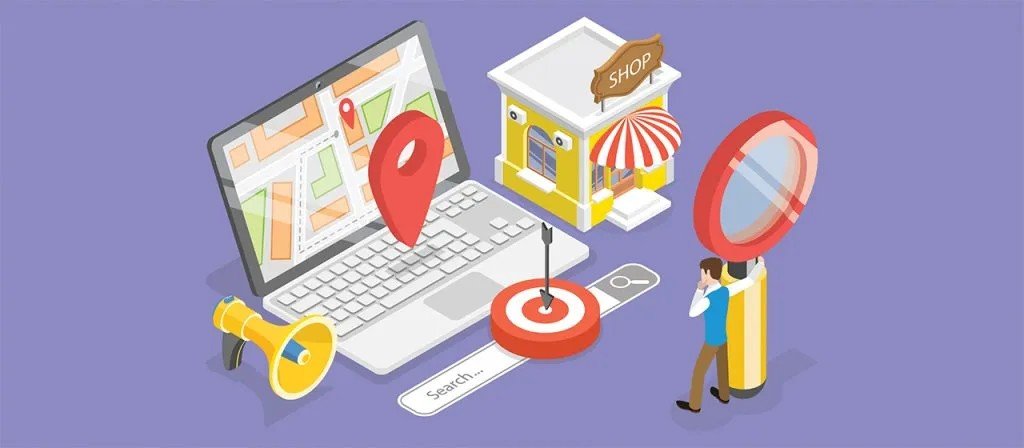
Local SEO (Search Engine Optimization) is the practice of optimizing your business’s online presence to attract customers from a specific geographic area — in this case, Miami and the surrounding communities.
When someone in Brickell types “best accountant near me” or a tourist in South Beach searches “seafood restaurant Miami Beach open now,” Google uses local SEO signals to decide which businesses to show. Those top three results — the local 3-pack — capture the lion’s share of clicks. If you’re not in that pack, you’re largely invisible to high-intent local buyers.
Miami presents a unique challenge and opportunity. The metro area spans Brickell, Wynwood, Coral Gables, Doral, Hialeah, and dozens of other distinct neighborhoods — each with its own search patterns. You can rank in one neighborhood and be invisible in another. Understanding Miami’s geographic nuance is a core part of any smart local search optimization strategy here.
For e-commerce brands with a Miami warehouse, pickup location, or service area, local SEO also drives “buy online, pick up in Miami” searches — a category that has grown significantly in Florida as customers expect both digital convenience and local fulfillment.
How Does Google Decide Who Ranks in Miami’s Local 3-Pack?
Google uses three primary factors to determine local rankings: relevance, distance, and prominence.
Relevance means how closely your business matches what the user searched for. If someone searches “roofing company Miami,” Google wants to show actual roofing companies — not general contractors who occasionally do roofs.
Distance is how far your business is from the searcher or the location named in the query. This is why a restaurant in Wynwood won’t automatically show up for searches happening in Coconut Grove, even in the same city.
Prominence is how well-known and trusted your business is online. Google evaluates this through review quantity and quality, backlinks from local websites, citation consistency, and overall engagement with your Google Business Profile.
How Miami’s Market Affects These Signals
Miami is unusually competitive in several high-demand service categories: law firms, real estate, insurance, medical practices, and restaurants. In these verticals, prominence is the hardest factor to improve quickly — it requires time, volume, and consistent effort.
One concrete example: a personal injury law firm in downtown Miami competing for “Miami personal injury lawyer” will need hundreds of Google reviews, citations across dozens of local directories, and links from local news and legal publications just to enter the competitive zone. A plumber in a less-contested neighborhood like Medley can see movement with fewer than 50 reviews if the other signals are strong.
How Do You Optimize a Google Business Profile for Miami?
A fully optimized Google Business Profile (GBP) is the single most impactful action you can take for local search visibility in Miami.
Start with the basics: claim and verify your listing, then make sure every field is complete and accurate. This means your business name, address, phone number, website URL, business categories, and hours — all consistent with what appears on your website and across the web.
Category Selection
Your primary category is the most important field in your GBP. Google uses it heavily in relevance matching. Pick the most specific, accurate category available — not a broad parent category. A Miami-based immigration attorney should select “Immigration Attorney,” not just “Lawyer.”
You can add up to ten secondary categories. Use them for real secondary services you offer, not for keyword padding.
Photos and Posts
Businesses with active photo uploads and regular GBP posts rank better than those with static, outdated profiles. Upload photos of your Miami location, staff, products, and completed work. Add at least one post per week — a Google Post about a current promotion, a new service, or a local community event works well.
Reviews and Responses
Reviews are both a ranking factor and a conversion driver. Ask satisfied customers to leave a Google review after every positive interaction. Respond to every review — positive and negative — within 48 hours. Google notices response activity, and prospective customers do too.
A useful benchmark: Miami businesses ranking consistently in the local 3-pack for competitive terms typically have 75+ reviews with an average rating above 4.4.
How Does Google Maps Ranking Work in a City Like Miami?
Google Maps ranking in Miami follows the same three-factor model (relevance, distance, prominence), but with some important local nuances worth understanding.
Service Area Businesses vs. Brick-and-Mortar
If you serve customers at their location — think HVAC, landscaping, or home cleaning — you’re a service area business (SAB). For SABs in Miami, you can set a service radius in your GBP instead of displaying a physical address. Your Maps ranking is then influenced by the center of your service area and the searcher’s location.
One important limitation: Miami SABs without a visible storefront tend to rank less prominently than businesses with a verified physical address. If you have the option to list a real address, do it.
Miami’s Neighborhood Segmentation
Miami’s dense, segmented geography means that “Miami” as a keyword behaves differently from “Miami Beach,” “Coral Gables,” or “Little Havana.” A business optimized for Brickell searches may underperform for Kendall or Homestead searches even if they’re technically within the service area.
The fix: make sure your website contains neighborhood-specific content, and that your GBP description and posts reference the specific Miami areas you serve. This sends stronger geo-relevance signals to Google.
Map Pack Position vs. Organic Rank
Ranking on Google Maps (the 3-pack) and ranking in traditional organic results are related but separate. A business can rank in the 3-pack without ranking on the first page of organic results — and vice versa. For complete Miami search visibility, you need both.
What Are the Most Effective Local Citation Strategies for Miami?
Local citations — online mentions of your business name, address, and phone number (NAP) — help Google verify that your business is real, legitimate, and located where you say it is.
The most important citations for Miami businesses are the major national directories: Google Business Profile, Yelp, Bing Places, Apple Maps, and Facebook. These are table stakes. If your NAP data is inconsistent across these platforms, Google reduces its confidence in your listing — and your rankings suffer.
Miami-Specific Citation Sources
Beyond the major platforms, Miami businesses benefit from citations on local and regional directories:
- Miami Herald Business Directory — regional authority and real local readership
- Greater Miami Chamber of Commerce — high trust, locally relevant backlink
- Brickell, Wynwood, or other BID directories — neighborhood-specific relevance signals
- South Florida Business Journal listings — relevant for B2B and professional services
- Industry-specific directories — Avvo for lawyers, Healthgrades for medical, Houzz for contractors
The goal is consistency, not volume. 50 citations with identical NAP data beats 200 citations with variations in your business name or address format.
The NAP Audit
Before building new citations, audit your existing ones. Search for your business name on Google and check every result where your NAP appears. Correct any discrepancies — even small ones like “St.” vs “Street” or a missing suite number can create conflicting signals.
What Results Can Miami Businesses Realistically Expect?

Most Miami businesses see measurable local SEO results within 3–6 months, but competitive timelines vary by industry and neighborhood.
Here’s a realistic breakdown by scenario:
Low competition (specialty service, outer neighborhoods): Businesses in niches like “Mandarin-speaking therapist Miami” or “industrial equipment repair Hialeah” can see Google Maps movement within 60–90 days of a full GBP optimization and citation cleanup.
Moderate competition (most service businesses): A Miami plumber, electrician, or accountant can expect to enter the local 3-pack for relevant non-branded searches within 4–6 months, assuming consistent effort across GBP, citations, reviews, and on-page local SEO.
High competition (law, real estate, medical, restaurants): Reaching the top 3 in Miami’s most competitive categories takes 9–18 months of sustained activity. This includes regular content, link building from local sources, review velocity, and technical SEO.
The businesses that see the fastest results aren’t those with the biggest budgets — they’re the ones that treat local SEO as an ongoing operation, not a one-time project.
What Are the Most Common Local SEO Mistakes in Miami?
The most common Miami local SEO mistake is inconsistent NAP data — and it’s more damaging here than in smaller markets because Miami businesses often have multiple locations, DBA names, or bilingual business names that create conflicting signals.
Other frequent mistakes include:
Ignoring neighborhood targeting. Optimizing only for “Miami” instead of the specific neighborhoods you actually serve. Google is highly localized — neighborhood-level signals matter.
Buying fake reviews. Google’s spam detection for fake reviews has improved significantly as of 2025–2026. Fake reviews now trigger suppression of entire GBP listings, which can wipe out months of legitimate ranking progress overnight.
Letting the GBP go stale. A profile with no new posts, no recent photos, and no review responses signals an inactive business to Google. Set a recurring calendar reminder to update your GBP at least once a week.
Building links without local relevance. A link from a generic DA50 blog in New York provides far less local ranking benefit than a link from the Miami New Times, a local industry association, or a Chamber of Commerce member page.
Ignoring Spanish-language local search. Miami has one of the highest concentrations of Spanish-speaking residents in the U.S. Businesses that optimize for Spanish-language queries — or maintain a parallel Spanish GBP profile — can capture a large segment of local search demand that most competitors ignore entirely.
How Do You Get Started with Local SEO in Miami?
Getting started is straightforward. The first 30 days should focus entirely on your foundation.
Week 1–2: Claim and fully optimize your Google Business Profile. Complete every field, select the right categories, upload 10–20 photos, and write a keyword-rich business description that mentions Miami and your core services.
Week 2–3: Audit and clean up your citations. Use a tool like BrightLocal, Whitespark, or Moz Local to find existing citations and flag inconsistencies. Correct them starting with the highest-authority directories.
Week 3–4: Build your review acquisition process. Create a simple, repeatable workflow for asking customers to leave a Google review. A follow-up text or email with a direct link to your GBP review page is all you need. Aim for at least 5 new reviews in your first 30 days.
Month 2 onward: Add neighborhood-specific landing pages to your website, start local link building outreach, and publish regular GBP posts. At the 90-day mark, run a rankings check to see where you’ve moved and adjust your focus accordingly.
Local SEO in Miami is not a one-time fix — it’s a compounding system. Businesses that maintain consistent activity month over month build a growing advantage over competitors who treat it as a set-it-and-forget-it project.
FAQs
Q: How long does local SEO take to work in Miami?
Most Miami businesses see measurable results within 3–6 months, depending on competition level. Low-competition niches and outer neighborhoods can move faster — sometimes within 60–90 days — while high-competition categories like law, real estate, or medical typically require 9–18 months of sustained effort.
Q: How much does local SEO cost for a Miami business?
Local SEO costs in Miami typically range from $500 to $3,000 per month for professional services, depending on scope and competition. DIY approaches using free tools like Google Business Profile, BrightLocal’s free tier, and basic citation submission can cost as little as your own time — though results take longer without expert guidance.
Q: What is a Google Business Profile and why does it matter for Miami SEO?
A Google Business Profile (GBP) is a free listing that controls how your business appears on Google Search and Google Maps. It’s the most important single asset for local search visibility in Miami because it directly determines whether you appear in the local 3-pack — the top three results shown for local searches.
Q: Can I do local SEO in Miami myself, or do I need an agency?
You can absolutely do local SEO yourself — especially the foundational work like GBP optimization and citation cleanup. Most business owners can handle these with free tools and 3–5 hours per month. However, competitive industries in Miami (legal, medical, real estate) typically benefit from professional help because the volume of required activity — link building, content, technical audits — exceeds what most owners can sustain solo.
Q: Does my Miami business need a physical address to rank on Google Maps?
You do not need a public-facing address to rank on Google Maps, but having a verified physical address generally improves your ranking ability. Service area businesses (SABs) that hide their address can still rank, but they tend to perform less strongly than businesses with a verified storefront, particularly in competitive Miami verticals.
Q: How important are Google reviews for Miami local search rankings?
Reviews are one of the three primary local ranking factors, alongside relevance and distance. In Miami’s competitive market, review quantity, recency, and your response rate all contribute to your prominence score. Businesses consistently ranking in the top 3 for competitive Miami terms typically maintain 75+ reviews with ratings above 4.4.
Q: What’s the difference between local SEO and regular SEO for Miami businesses?
Local SEO targets geographically specific search queries and focuses heavily on Google Business Profile, Google Maps, citations, and local reviews. Regular (organic) SEO targets broader queries and relies more on website content, backlinks, and technical factors. Miami businesses need both: local SEO to win the Maps 3-pack, and organic SEO to rank in the traditional blue-link results below it.
Q: Should my Miami business website have separate pages for different neighborhoods?
Yes, if you serve multiple distinct Miami neighborhoods. A separate landing page for each area you serve — Coral Gables, Brickell, Doral, etc. — allows you to target neighborhood-specific search queries, include locally relevant content, and send stronger geo-relevance signals to Google. These pages should have unique, useful content — not just the same text with the neighborhood name swapped out.
Q: Does bilingual content help with local SEO in Miami?
Yes, significantly. Miami has one of the largest Spanish-speaking populations in the U.S., and a meaningful percentage of local searches happen in Spanish. Businesses that create Spanish-language content, maintain a Spanish GBP description, and optimize for Spanish-language queries can access a large pool of local search demand that most English-only competitors ignore.
Q: How do I find local backlink opportunities in Miami?
Focus on Miami-specific sources: the Greater Miami Chamber of Commerce, local BIDs (Business Improvement Districts), neighborhood association directories, the Miami Herald, Miami New Times, South Florida Business Journal, local sponsorships, and community event partnerships. A link from a high-authority local source carries far more weight for Miami rankings than a generic link from an unrelated national website.
Conclusion
Local SEO in Miami is one of the highest-ROI marketing activities available to businesses operating in this market — but only when it’s done consistently and strategically.
The key takeaways: your Google Business Profile is your most important local asset and needs active maintenance, not just a one-time setup. Google Maps ranking in Miami depends on relevance, distance, and prominence — all three need attention. Citation consistency is the foundation that everything else builds on. And this city’s geographic complexity means neighborhood-level targeting is not optional; it’s essential.
The businesses winning local search in Miami in 2026 treat it as an ongoing system — steady review acquisition, regular GBP activity, and gradual link building from genuinely local sources.
If you’re ready to move on this, start with your Google Business Profile today. Complete every field, upload photos, and ask your next five satisfied customers for a review. That’s a better use of the next 30 minutes than reading one more article about local SEO.