
What You’ll Learn
- What SearchSEO is and how its CTR bot actually works under the hood
- How CTR manipulation signals interact with Google’s ranking algorithm
- How SearchSEO compares to SerpClix and similar traffic tools
- What realistic results look like — and what the risks genuinely are
- How to evaluate whether a CTR tool is worth using for your specific situation
Introduction
SearchSEO is a CTR manipulation platform that sends simulated or real-user traffic to your website through Google Search to boost your click-through rate signals. If you’ve been researching whether SearchSEO’s CTR bot is worth buying — or just trying to understand what CTR manipulation actually does — this guide cuts through the noise.
SearchSEO sits in a growing category of SEO tools that target behavioral signals rather than traditional on-page or link-building tactics. The idea is straightforward: if Google uses CTR as a ranking factor, artificially increasing it should move your page up. Whether that logic holds — and whether it’s safe — is what this article digs into.
This guide is written for SEO professionals, affiliate marketers, and website owners who want a clear-eyed view of how SearchSEO works, how it stacks up against alternatives like SerpClix, and what you should realistically expect before spending money on traffic manipulation.
What Is SearchSEO and Who Uses It?
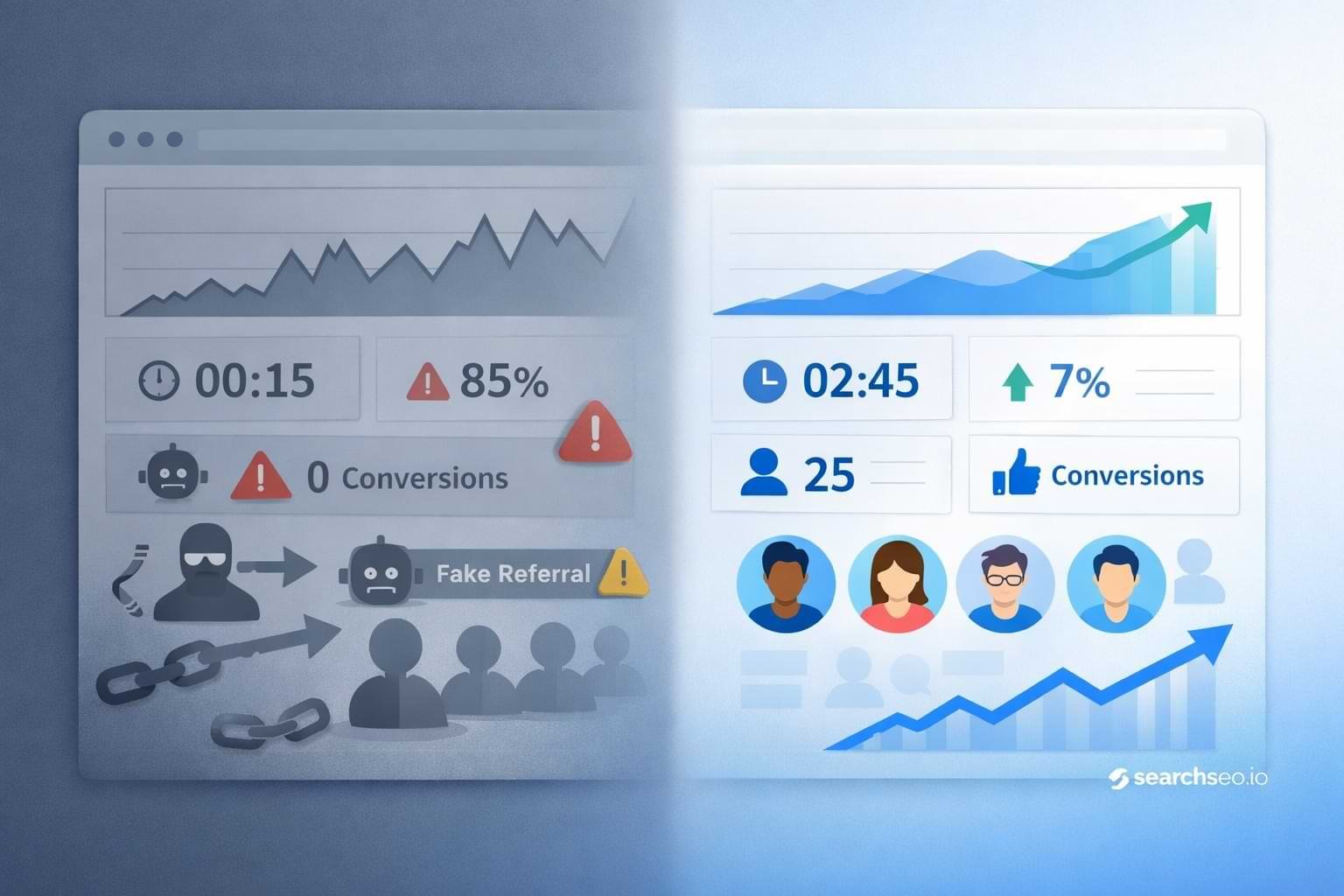
SearchSEO is a web-based platform that generates click-through traffic to your URLs via Google Search results, designed to improve your organic CTR signals. It targets a specific belief held by many SEOs: that Google’s algorithm treats high CTR as a quality signal and rewards pages that get clicked more often than competitors.
The platform is used primarily by three groups:
- SEO professionals running controlled ranking experiments or working on competitive keywords
- Affiliate marketers who need ranking momentum on revenue-generating pages
- Website owners trying to push pages that sit just outside page-one positions over the threshold
SearchSEO lets users set target keywords, specify the URLs they want clicked, and configure session behavior (time on site, scroll depth, bounce rate simulation). The goal is to make each visit look like genuine organic traffic from a real searcher.
Who Shouldn’t Use It
SearchSEO is not the right tool if you’re building a long-term brand presence, if your site is in a high-trust category like finance or healthcare, or if you haven’t addressed underlying on-page and technical SEO issues first. CTR manipulation is a signal amplifier — it can’t fix a fundamentally weak page.
How Does a CTR Bot Work?
A CTR bot works by automating search queries and simulating user interactions — visiting your page from a search result, spending time on it, and behaving like a real user — to send positive behavioral signals to Google. SearchSEO’s system is more sophisticated than basic bots. It uses a combination of residential proxies and rotating user agents to make each session look distinct.
Here’s the typical flow:
- A query is triggered for your target keyword
- Google’s search results page loads
- Your URL is clicked (with realistic scroll and dwell behavior before and after)
- The session proceeds with configurable time-on-site parameters
- Exit behavior is controlled to minimize unnatural bounce patterns
The difference between a cheap bot and a platform like SearchSEO is session quality. Low-quality bots send traffic from datacenter IPs that Google’s systems detect almost immediately. SearchSEO’s architecture is built to pass basic fingerprinting checks.
How Is This Different from Buying Regular Web Traffic?
Regular paid traffic (display ads, native ads, pop traffic) sends visitors directly to your URL — not through Google Search. CTR bots specifically trigger the search result click, which is what creates the behavioral signal that CTR-focused SEOs care about. These are fundamentally different use cases.
What Is CTR Manipulation and Why Does It Matter for SEO?
CTR manipulation is the practice of artificially inflating the click-through rate of a search result to signal to Google that the page is more relevant and engaging than competitors. Google’s algorithm is known to incorporate user engagement signals, and CTR is one of the most debated among SEOs.
The theoretical basis comes from several sources: Google patents describing user behavior signals, leaked internal documents, and independent ranking experiments run by SEOs. The most cited of these is the work done by Rand Fishkin and others demonstrating short-term ranking lifts after coordinated manual clicking campaigns.
CTR manipulation works — when it works — by convincing Google’s ranking systems that users prefer your result over others for a given query. If enough sessions show high dwell time and low pogo-sticking (returning quickly to the search results), the algorithm may interpret your page as the best answer.
Is CTR a Confirmed Ranking Factor?
Google has officially denied using CTR as a direct ranking factor in its core algorithm. However, leaked documentation and patents suggest user interaction signals play some role — possibly through Quality Evaluator data, Search Quality signals, or indirect feedback loops. The SEO community remains divided, and the honest answer is: the mechanism isn’t fully confirmed, but the experimental evidence for short-term impact is hard to dismiss entirely.
SearchSEO vs SerpClix: How Do They Compare?
SearchSEO and SerpClix are both CTR manipulation platforms, but they take meaningfully different approaches to traffic generation. SerpClix uses a marketplace of real human clickers — people who get paid to perform manual searches and clicks. SearchSEO relies more heavily on automated bot traffic with behavioral simulation layered on top.
| Feature | SearchSEO | SerpClix |
|---|---|---|
| Traffic type | Bot-based + behavioral simulation | Real human clickers |
| Speed | Fast (near-instant scaling) | Slower (depends on clicker availability) |
| Pricing model | Credits/subscription | Pay per click |
| Session quality control | Configurable | Variable (human behavior) |
| Detection risk | Moderate (proxy quality dependent) | Lower (real users) |
| Geo-targeting | Yes | Yes |
Which One Is Better?
It depends on what you’re optimizing for. SerpClix’s real-human traffic produces more naturally varied session behavior, which can be harder for Google’s systems to pattern-match as manipulated. SearchSEO offers more control and faster scaling, which suits users running rapid A/B tests across multiple keywords.
Many experienced SEOs who use CTR tools at all will test both on separate campaigns before committing to one platform for ongoing use.
What Results Can You Realistically Expect?
Realistic results from SearchSEO CTR campaigns vary significantly by keyword competitiveness, page quality, and how the campaign is configured. On low-competition keywords (typically under 1,000 monthly searches), some users report noticeable position improvements within 1–2 weeks of sustained CTR activity.
On competitive terms, the picture is murkier. CTR signals alone are unlikely to overcome large authority gaps between your page and established competitors. Think of CTR manipulation as a nudge — not a substitute for content quality, backlinks, or technical SEO.
A realistic benchmark based on publicly shared case studies:
- Positions 6–15 on low-competition terms: Most likely to see measurable movement (2–5 position lifts within 2–3 weeks)
- Positions 1–5 on competitive terms: Minimal impact without other optimization factors in place
- Local SEO and geo-targeted queries: Reported to respond more readily to CTR signals than national queries
What Doesn’t Work
CTR manipulation rarely produces durable results on its own. Pages that rank through artificial CTR signals — without genuine content improvements — tend to slip back once campaigns stop. The signal is temporary unless the underlying page earns organic engagement on its own.
What Are the Risks of CTR Manipulation?
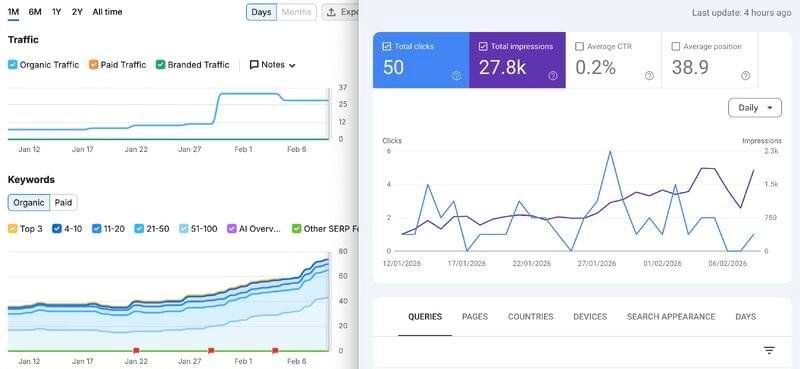
The primary risk of CTR manipulation with tools like SearchSEO is a Google manual action or algorithmic penalty that drops your rankings — sometimes below their starting point. Google’s Webmaster Guidelines explicitly prohibit manipulating search signals, and this includes artificial CTR inflation.
The risk isn’t hypothetical. Google has become significantly better at detecting unnatural traffic patterns, particularly since 2023. Signals it looks for include:
- Sessions from the same IP ranges hitting your site repeatedly for the same keyword
- Unnatural dwell time distributions (too uniform, too perfectly optimized)
- Click patterns that don’t match the historical baseline for your query
- Sudden CTR spikes on keywords where your page has low impressions
How Serious Is the Penalty Risk?
For most users running low-volume, carefully configured campaigns, the immediate penalty risk is moderate rather than severe. The bigger risk is subtler: algorithmic down-ranking that’s hard to diagnose because it won’t show as a manual action in Search Console. If your traffic drops two weeks after starting a CTR campaign, correlation doesn’t always mean causation — but it’s worth noting.
If you’re managing a high-revenue site where a ranking drop would have serious business consequences, the risk-reward calculation is genuinely poor.
How Do You Get Started with SearchSEO?
Getting started with SearchSEO involves creating an account, funding credits, and setting up your first campaign with a target keyword, URL, and session parameters. The setup process is straightforward for anyone with basic SEO campaign experience.
A practical starting sequence:
- Start small. Test on a secondary page or a low-stakes keyword before running campaigns on your primary money pages.
- Set realistic session parameters. Match your target keyword’s average session behavior — don’t configure dwell times that are far outside the norm for your niche.
- Spread delivery over time. Campaigns that spike CTR sharply in a short window are more detectable. Distribute impressions across days.
- Track in Search Console. Monitor your CTR data in Google Search Console before and after campaigns to measure actual impact. Isolate the specific keyword and device type.
- Don’t stop other SEO work. CTR campaigns work best as a complement to active content and link building — not a replacement.
Common Mistakes to Avoid
The most common mistake with CTR tools like SearchSEO is over-investing in manipulation while under-investing in the page itself. If the content doesn’t satisfy the user’s query once they arrive, no amount of CTR manipulation will produce sustained rankings.
Other mistakes that undermine campaigns:
- Targeting the wrong keywords. Don’t burn credits on keywords where your page doesn’t reasonably deserve to rank — the mismatch creates poor quality signals even if the CTR temporarily goes up.
- Ignoring bounce rate simulation. Sessions that click and immediately leave send a negative signal. Make sure your campaign configuration reflects realistic engagement.
- Running campaigns on penalized or thin content pages. CTR manipulation on pages Google has already assessed negatively doesn’t reverse the underlying signal problem.
- Expecting permanent results from temporary campaigns. CTR signals fade when campaigns stop. Build a plan for the page to earn organic engagement after the initial push.
- Not tracking baseline data first. Without pre-campaign benchmarks in Search Console, you can’t accurately attribute rank changes to the CTR work.
FAQs
Q: What is SearchSEO?
SearchSEO is a CTR manipulation platform that uses bot-driven traffic to simulate organic click-through signals in Google Search. It is used by SEO professionals to test whether increasing CTR for a target keyword improves search rankings.
Q: Does the SearchSEO CTR bot actually work?
It can produce short-term ranking lifts, particularly on lower-competition keywords, but results are not guaranteed and rarely permanent. The effectiveness depends heavily on keyword competitiveness, page quality, and campaign configuration — not just the tool itself.
Q: Is CTR manipulation safe for my website?
CTR manipulation violates Google’s Webmaster Guidelines and carries a risk of manual action or algorithmic down-ranking. The risk level depends on campaign volume, traffic quality, and how well the sessions mimic natural behavior. High-revenue sites should weigh this risk carefully.
Q: How does SearchSEO compare to SerpClix?
SearchSEO uses primarily automated bot traffic with behavioral simulation, while SerpClix relies on real human clickers. SerpClix traffic is generally harder for Google to detect as artificial; SearchSEO offers faster scaling and more parameter control. Both are CTR manipulation tools with similar risk profiles.
Q: What keywords respond best to CTR manipulation?
Low-competition keywords — typically those with under 1,000–2,000 monthly searches and limited page-one authority — respond most consistently to CTR manipulation signals. Highly competitive terms require much more than CTR work to move meaningfully.
Q: How many credits or clicks do I need to see results with SearchSEO?
There is no universal answer, but most users who report results run campaigns consistently for 2–4 weeks rather than one-off bursts. Starting with 50–100 targeted clicks per day on a specific keyword is a reasonable baseline for initial testing.
Q: Will my rankings drop when I stop a SearchSEO campaign?
Often, yes — especially if the page hasn’t improved its organic engagement in the meantime. CTR manipulation creates a temporary signal boost. Pages that don’t convert that lift into genuine user engagement tend to drift back toward their previous positions.
Q: Can I use SearchSEO alongside other SEO strategies?
Yes, and most experienced users do. CTR tools are most effective when supporting an active SEO program that includes content improvement, link building, and technical optimization — not as a standalone tactic.
Q: Does Google detect CTR bots?
Google’s systems are designed to detect and discount unnatural behavioral signals, and they have improved significantly in recent years. Detection risk is real, particularly for high-volume campaigns or those using low-quality proxy networks. No CTR tool can claim to be undetectable.
Q: Is it legal to use a CTR bot like SearchSEO?
Using CTR bots is not illegal, but it violates Google’s Terms of Service. The consequence is platform-level — potential search ranking penalties — not legal liability. The risk is reputational and financial through lost organic visibility, not criminal.
Conclusion
SearchSEO and CTR manipulation tools occupy a genuinely gray area in SEO practice. The experimental evidence that CTR signals influence rankings is hard to dismiss, but so is the risk of algorithmic penalties and the temporary nature of results that aren’t backed by real content quality.
Here are the four things worth taking away from this guide:
- CTR manipulation can work short-term, especially on low-competition keywords where your page is close to ranking on its own merit.
- SearchSEO and SerpClix are different tools with different traffic quality profiles — both carry risk, and neither is a substitute for fundamental SEO work.
- The risk scales with campaign volume and site value. Small tests on secondary pages carry much less exposure than sustained campaigns on revenue-critical URLs.
- Results fade without a follow-through plan. The best use of CTR tools is to earn initial visibility while investing in the content and UX improvements that make organic clicks stick.
If you’re evaluating SearchSEO seriously, the most honest recommendation is to start with a small, controlled test on a page that matters but isn’t mission-critical — track your Search Console data carefully, and let the results guide your decision, not marketing claims.