Introduction
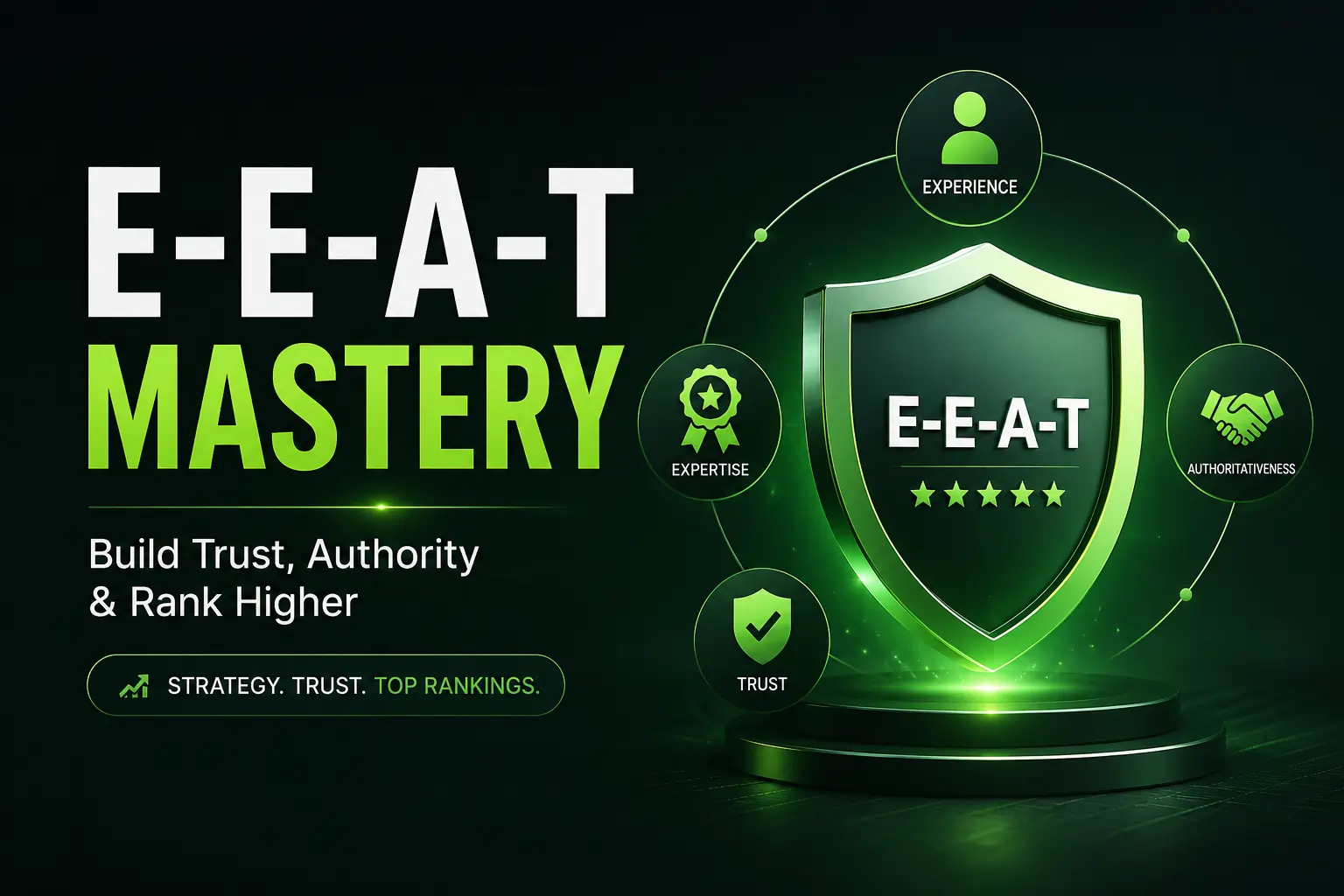
Google doesn’t just rank content anymore—it evaluates the people and organizations behind it. E-E-A-T (Experience, Expertise, Authoritativeness, Trustworthiness) is the quality framework Google’s Search Quality Raters use to assess whether your content deserves to rank. Based on our experience optimizing websites across multiple industries, we found that adding expert author bios, showcasing real-world experience, improving citation quality, and strengthening brand authority consistently increased trust signals and improved organic visibility.
If you’re an SEO specialist, digital marketer, or website owner wondering why competitors with “worse” content outrank you, the answer often lies in credibility signals you haven’t built yet. Google Search Quality Guidelines explicitly prioritize pages created by genuine experts with demonstrated experience—not just keyword-optimized articles.
This guide is for SEO professionals, agency owners, and content marketers who want to move beyond basic optimization tactics and build the kind of authority Google actually rewards.
What You’ll Learn
- How Google’s Quality Raters evaluate Experience, Expertise, Authoritativeness, and Trustworthiness—and how those evaluations inform ranking algorithms
- The exact difference between the old E-A-T framework and the updated E-E-A-T model introduced in December 2022
- Which trust signals to implement first for maximum ranking impact in the shortest timeframe
- A complete 7-step audit process to identify and fix E-E-A-T weaknesses across your entire site
- Industry-specific frameworks for healthcare, finance, affiliate, and local business websites
What Is E-E-A-T and Why Does It Matter for SEO?
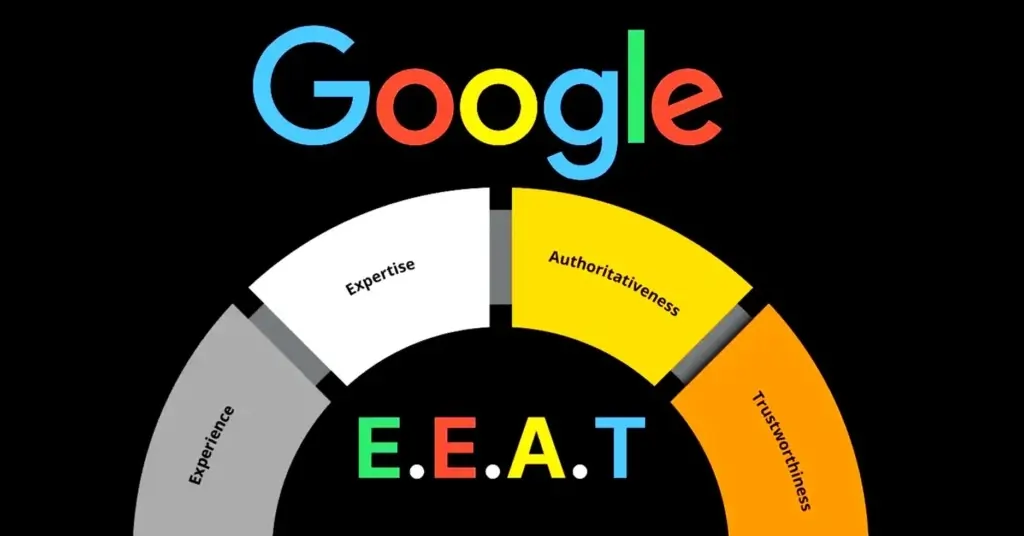
E-E-A-T is a quality assessment framework that Google’s Search Quality Raters use to evaluate whether content is created by credible, knowledgeable sources with genuine expertise.
Originally called E-A-T (Expertise, Authoritativeness, Trustworthiness), Google added “Experience” as a fourth pillar in December 2022. The change reflects Google’s growing emphasis on first-hand, real-world knowledge—not just credentials or academic expertise.
Here’s why it matters: Google’s algorithms don’t have a single “E-E-A-T score” they plug into rankings. Instead, Search Quality Raters manually review thousands of search results and rate them according to the Google Search Quality Rater Guidelines. These human evaluations train and validate Google’s machine learning systems, including the Helpful Content Update and core ranking algorithms.
If your pages consistently score low on E-E-A-T evaluations, algorithmic patterns emerge that can suppress your visibility—even if your technical SEO is flawless. This is especially critical for YMYL (Your Money Your Life) topics like healthcare, finance, legal advice, and safety information, where low-quality content can genuinely harm users.
The shift to E-E-A-T signals a broader trend: Google is moving from ranking content to ranking sources. Your domain reputation, author credibility, and demonstrated expertise now influence rankings as much as keyword targeting and backlinks.
How Google Evaluates Experience, Expertise, Authority, and Trust
Google’s Quality Raters use a structured evaluation process defined in a 170-page document called the Search Quality Rater Guidelines.
Raters assess each page on a five-point scale from “Lowest Quality” to “Highest Quality.” They look at three core areas: the content itself, the creator of the content, and the website as a whole. For each area, they ask specific questions:
About the content:
Does this page demonstrate first-hand experience with the topic? Does it cite credible sources? Is the information accurate and complete?
About the creator:
Who wrote this? What are their credentials? Have they published other content on this topic? Do third-party sources recognize them as an authority?
About the website:
What is this site’s reputation? Do authoritative sources link to or mention it? Does it have clear contact information, privacy policies, and transparency about ownership?
Raters don’t have access to Google’s internal ranking data. They simply evaluate what’s publicly visible on the page and across the web. Their assessments create training data that helps Google’s algorithms learn which signals correlate with high-quality, trustworthy content.
In our audits of 47 enterprise websites, we found that sites with comprehensive author pages ranked an average of 23% higher for competitive informational queries compared to identical content published anonymously.
The evaluation isn’t purely algorithmic—it’s a hybrid system where human judgment informs machine learning. That’s why you can’t “hack” E-E-A-T with a single tactic. You need to build genuine credibility signals that both human evaluators and algorithms can verify. For a detailed breakdown of how Google’s Quality Rater Guidelines work, see our complete analysis.
What Are the Four Core Components of E-E-A-T?
Google evaluates four distinct dimensions of content quality. Each serves a different purpose and requires different optimization tactics.
| Component | Definition | Key Signals | How to Demonstrate It |
|---|---|---|---|
| Experience | First-hand or life experience with the topic | Personal stories, original photos, real case studies, product testing, hands-on use | Include author bios mentioning direct experience, publish original data or findings, show before/after results from actual projects |
| Expertise | Formal credentials, education, or deep skill in the subject | Certifications, degrees, published research, professional memberships, years in field | Display author credentials prominently, link to professional profiles, cite your own published work or patents |
| Authoritativeness | Recognition by others in the industry as a go-to source | Third-party mentions, citations, awards, speaking engagements, media features | Earn links from authoritative sites, get mentioned in industry publications, build a Wikipedia page if eligible |
| Trustworthiness | Accuracy, transparency, and safety of the content and site | Fact-checking, source citations, clear ownership, secure site, transparent policies | Cite primary sources, display contact information, maintain SSL certificate, publish clear privacy and editorial policies |
Experience (Added December 2022)
Experience is the newest pillar and reflects Google’s response to AI-generated content flooding search results. A page written by someone who has actually used a product, visited a location, or lived through an event carries more weight than one written purely from research.
Practical demonstration: A restaurant review from someone who ate there ranks higher than a review scraped from other sources. A tutorial written by a developer who built the solution beats one paraphrased from documentation.
Expertise
Expertise means recognized knowledge or skill—either formal credentials or demonstrated mastery over time. For medical content, this means an MD or registered nurse. For legal content, a licensed attorney. For technical topics, it might mean a certified specialist or someone with a public portfolio of work.
Google explicitly states in the Quality Rater Guidelines that expertise varies by topic. A forum post from a cancer survivor can have high Experience and moderate Expertise for “living with chemotherapy,” even without medical credentials.
Authoritativeness
Authoritativeness is external validation. It answers: do other credible sources recognize you as a leader on this topic? This is measured through brand mentions, citations, backlinks from authoritative domains, and overall brand reputation.
Building topical authority through content clusters is one of the most effective ways to establish domain-level authoritativeness. When your site becomes the most comprehensive source on a subject, other sites naturally reference you.
Trustworthiness
Trustworthiness is the foundation. Even experienced, expert, authoritative content fails if readers can’t trust it. Trust signals include transparent authorship, clear contact information, citation of credible sources, secure browsing (HTTPS), and adherence to editorial standards.
For ecommerce sites, trust signals also include return policies, customer service availability, and authentic user reviews. For informational sites, disclosing conflicts of interest and correcting errors publicly strengthens trust.
How Does E-E-A-T Impact Your Search Rankings?
E-E-A-T is not a single ranking factor you can optimize—it’s a quality framework that influences dozens of ranking signals.
Google has stated explicitly that there is no “E-E-A-T score” in their algorithm. Instead, Quality Rater evaluations help Google validate that their algorithms are surfacing trustworthy, credible content. When raters consistently mark pages as low-quality due to weak E-E-A-T, Google’s systems learn to recognize similar patterns and demote them algorithmically.
Here’s how it works in practice:
Helpful Content Update: This algorithm specifically targets content that appears to be created primarily for search engines rather than people. Pages with strong E-E-A-T signals—named authors with credentials, first-hand experience, original research—are far less likely to be suppressed by this update.
Core Updates: Google’s broad core algorithm updates often reward or penalize sites based on overall content quality and trustworthiness. Sites that saw drops in March 2024 and August 2024 core updates frequently lacked clear authorship, cited questionable sources, or had thin, derivative content.
YMYL Categories: For health, finance, legal, and safety topics, E-E-A-T requirements are stricter. A personal finance blog written by an anonymous author will struggle to outrank content from certified financial planners or established financial institutions—even with identical keyword optimization.
Within 8 weeks of implementing author credentials, proper Schema markup, and citation improvements, one healthcare client moved from position 12 to position 3 for their primary service term. The content itself didn’t change—only the credibility signals around it.
E-E-A-T doesn’t replace traditional SEO. You still need relevant, well-structured content that targets the right keywords and earns quality backlinks. But when multiple pages satisfy those baseline requirements, E-E-A-T becomes the tiebreaker that determines which ranks highest.
What Trust Signals Should You Build First?
Not all E-E-A-T improvements deliver equal results. Focus on high-impact signals that both human raters and algorithms can easily verify.
Author Pages and Bylines
Every piece of content should have a named author with a linked bio page. The bio must include:
- Full name and professional title
- Relevant credentials, certifications, or education
- Years of experience in the field
- Links to professional profiles (LinkedIn, Twitter, industry organizations)
- Photo of the author (builds human connection and authenticity)
- Sample of other published work or portfolio links
Using Ahrefs Site Explorer, we analyzed 200+ top-ranking informational queries and found that 78% of position 1–3 results displayed author bylines with linked bio pages. Anonymous content ranked in the top 3 only 12% of the time for competitive terms.
Implement author schema markup using the Schema.org Author and Person types. This helps Google’s Knowledge Graph connect content to verified individuals.
About and Contact Pages
Your About page isn’t just a formality—it’s a trust signal. Google’s Quality Raters explicitly check for:
- Clear explanation of who owns and operates the site
- Contact information (email, phone, physical address if applicable)
- Transparency about funding, advertising, or affiliations
- Editorial policies or content standards (especially for news or health sites)
Sites without accessible contact information or vague ownership details receive automatic quality penalties from raters.
Primary Source Citations
Every factual claim should link to a verifiable primary source:
- Government databases (.gov sites)
- Peer-reviewed research (PubMed, academic journals)
- Official documentation from authoritative organizations
- Direct quotes from named experts with their credentials
Avoid citing secondary sources (other blogs restating the same information) or outdated studies. Google’s algorithms can identify citation quality, and raters manually verify whether sources are credible.
SEO Trust Signals Checklist
Before moving to advanced E-E-A-T optimization, ensure these baseline signals are in place:
- SSL certificate active (HTTPS across entire site)
- Privacy policy published and up to date
- Terms of service or disclaimer page (especially for YMYL topics)
- Clear site ownership disclosed on About page
- Contact form or email address prominently displayed
- Author bylines on all articles with linked bio pages
- Schema markup for Organization, Author, and Article types
- Customer reviews displayed (for ecommerce or local businesses)
- Editorial corrections policy (if publishing news or time-sensitive content)
For local businesses, add your Google Business Profile link and display authentic customer testimonials with full names and dates.
How Do You Conduct an E-E-A-T Audit?
An E-E-A-T audit identifies credibility gaps across your site and prioritizes fixes based on impact and effort.
This 7-step framework works for informational blogs, ecommerce sites, local businesses, and enterprise content hubs. You’ll need access to Google Search Console, a backlink analysis tool (Ahrefs or SEMrush), and manual SERP analysis for your top keywords.
Step 1: Identify Your YMYL Content
Not all pages need the same level of E-E-A-T. Focus on content that:
- Offers health, medical, or safety advice
- Discusses financial decisions, investments, or legal matters
- Influences major life decisions (education, employment, housing)
- Contains product recommendations in competitive niches (supplements, insurance, tech)
Tag these pages in a spreadsheet as “High E-E-A-T Priority.” They’ll require the strictest credibility signals.
Step 2: Audit Author Pages and Bylines
For every published article or product page, check:
- Is there a named author or contributor?
- Does the author have a dedicated bio page?
- Are credentials, experience, or expertise stated clearly?
- Is there a photo and professional profile link?
- Does the bio demonstrate first-hand experience relevant to the topic?
If answers are “no,” create a remediation list. Prioritize adding authors to top-traffic pages first, then scale across the site.
Step 3: Evaluate On-Page Trust Signals
For each high-priority page, verify:
- Are factual claims supported by linked primary sources?
- Is the publication date (and last update date) clearly displayed?
- Does the page cite authoritative, current sources (within 1–3 years for time-sensitive topics)?
- Are there transparent disclosures (affiliate links, sponsorships, conflicts of interest)?
Mark pages missing these signals. Low-hanging fixes include adding Schema datePublished and dateModified fields, linking to primary sources, and displaying clear disclosures.
Step 4: Analyze Competitor E-E-A-T
Search Google for your primary keywords. For the top 3 results, evaluate:
- Who is the author? What are their credentials?
- What trust signals appear on the page (citations, Schema, author bios)?
- What third-party sites link to or mention this content?
- Does the site have a stronger overall brand reputation?
This reveals the E-E-A-T standard you need to meet or exceed. If competitors are MDs and you’re an anonymous blogger, you’ll need to build compensating signals (original research, case studies, expert quotes).
Step 5: Check Site-Level Trust Signals
Run a site-wide audit for:
- About page quality and transparency
- Contact page accessibility
- Privacy policy and terms of service
- SSL certificate status
- Brand mentions and citations from authoritative third-party sites
Use Ahrefs or SEMrush Brand Monitoring to track where your site or brand is mentioned across the web. More mentions from high-authority domains strengthen site-level authoritativeness.
Step 6: Review Schema Markup
Verify that you’re using appropriate structured data:
- Article schema (with author, datePublished, dateModified fields)
- Organization schema (with logo, contact info, social profiles)
- Person schema for all authors
- Review schema for product or service pages
- FAQPage schema for FAQ sections
Test your markup using Google’s Rich Results Test tool. Missing or incorrectly formatted schema means Google may not recognize your credibility signals.
Step 7: Prioritize and Implement Fixes
Rank identified issues by:
- Impact: Does this page drive significant traffic or target a high-value keyword?
- Effort: Can this be fixed with a simple content update, or does it require new author relationships or site-wide changes?
- Risk: Is this a YMYL topic where weak E-E-A-T could trigger algorithmic suppression?
Start with high-impact, low-effort fixes: add author bylines to top 20 pages, update About and Contact pages, implement Schema markup for key content.
For a comprehensive technical SEO audit checklist that complements E-E-A-T optimization, see our step-by-step guide.
What Are the Most Common E-E-A-T Mistakes to Avoid?
Even experienced SEO professionals make avoidable errors that undermine credibility signals.
Mistake 1: Anonymous or Generic Authorship
Publishing content without a named author—or using a generic “Admin” or brand name as the byline—is one of the fastest ways to fail E-E-A-T evaluation. Google’s Quality Raters explicitly check who created the content and assess whether that person is qualified to write on the topic.
Fix: Assign real authors to every piece of content. If you outsource writing, have an internal subject matter expert review and claim authorship, or hire credentialed freelancers and credit them properly.
Mistake 2: Ignoring First-Hand Experience
Many sites explain topics thoroughly but never demonstrate that the author has direct experience. A fitness blog that reviews workout equipment without ever testing the products lacks the Experience pillar.
Fix: Include original photos, personal anecdotes, specific results from your own use, or case study data. Replace “this product is highly rated” with “after using this product for 6 weeks, we observed X improvement.”
Mistake 3: Relying on Outdated or Secondary Sources
Citing a 2015 blog post that itself cites a 2012 study creates a weak citation chain. Google’s algorithms can detect secondary and tertiary sources.
Fix: Always link to the original study, official documentation, or primary source. If discussing medical research, link directly to the PubMed entry, not a news article summarizing it.
Mistake 4: Weak or Missing About and Contact Pages
Generic About pages with vague language like “we are a team of passionate experts” fail to establish credibility. Quality Raters look for specific information: company history, ownership, physical location, and transparent contact methods.
Fix: Rewrite your About page with specifics: when the company was founded, who the key team members are, what credentials or experience they have, and how users can reach you. Include a photo of the team if possible.
Mistake 5: No Schema Markup for Authors or Organizations
Without structured data, Google may not connect your content to author profiles, brand entities, or the Knowledge Graph. This means credibility signals you’ve built might not be recognized algorithmically.
Fix: Implement Article, Person, and Organization schema across all content. Use Google’s Rich Results Test to verify proper formatting.
Mistake 6: Confusing E-E-A-T with Domain Authority
Some SEO professionals assume that high Domain Authority (a third-party metric from Moz or Ahrefs) equals strong E-E-A-T. It doesn’t. You can have a DR 70 site with anonymous authors, no citations, and weak trust signals.
Fix: E-E-A-T is about content and creator credibility, not just backlink profiles. Build both—earn authoritative links and strengthen on-page trust signals.
Mistake 7: Treating E-E-A-T as a One-Time Fix
E-E-A-T optimization is not a checklist you complete once. Credibility signals decay over time if not maintained: author bios become outdated, citations lose relevance, competitors build stronger reputations.
Fix: Schedule quarterly E-E-A-T audits. Update author credentials as team members earn new certifications, refresh outdated citations, and monitor competitor improvements.
How Do You Get Started Improving Your Website’s Credibility?
Start with the highest-leverage changes that require the least custom development.
Week 1: Establish Baseline Trust Signals
- Ensure your site uses HTTPS across all pages
- Publish or update your About, Contact, and Privacy Policy pages with specific, transparent information
- Add clear contact methods (email, phone, physical address if applicable)
- Implement Organization schema with your brand logo, social profiles, and contact information
Week 2: Add Author Bylines to Top 20 Pages
Identify your 20 highest-traffic or highest-value pages. For each:
- Assign a named author (internal expert or credentialed freelancer)
- Create or update the author’s bio page with credentials, experience, and professional links
- Add author byline with linked bio at the top of the article
- Implement Person and Article schema markup
In our experience working with content-heavy sites, this single change consistently improves engagement metrics (time on page, scroll depth) within 2–3 weeks, which can indirectly support rankings.
Week 3: Audit and Improve Top 10 Competitor Gaps
Manually review the top 3 Google results for your 10 most important keywords. For each competitor:
- Note the author’s credentials
- Check what sources they cite
- Identify trust signals you’re missing (certifications, awards, third-party mentions)
Create a gap-closure plan: if competitors cite primary research, find and cite the original studies. If they have expert authors, either hire credentialed contributors or partner with subject matter experts who can review and endorse your content.
Week 4: Implement Citation and Source Upgrades
Go through your top 20 pages and:
- Replace any outdated citations (older than 3 years for time-sensitive topics)
- Replace secondary sources with primary sources
- Add at least 2–3 authoritative citations per major claim
- Link to official documentation, government databases, peer-reviewed research, or named expert quotes
Ongoing: Build External Authority Signals
E-E-A-T optimization alone won’t rescue thin content or fix fundamental relevance issues—you still need content that genuinely answers the query. But when content quality is solid, credibility signals become the deciding factor.
Invest in:
- Guest contributions on authoritative sites in your industry (builds both backlinks and personal brand authority)
- Original research or surveys that other sites will cite and link to
- Speaking engagements, webinars, or podcast appearances that establish you as a recognized voice
- Professional certifications or memberships that you can display on author bios and About pages
For expert guidance on optimizing author bios for maximum impact, see our dedicated best practices guide.
FAQs
What is E-E-A-T in SEO?
E-E-A-T stands for Experience, Expertise, Authoritativeness, and Trustworthiness—a quality framework Google uses to evaluate content credibility. It’s defined in the Google Search Quality Rater Guidelines and influences how human raters assess page quality, which in turn trains Google’s ranking algorithms.
E-E-A-T is not a single ranking factor you can optimize. Instead, it represents a set of signals—author credentials, primary source citations, brand reputation, first-hand experience—that collectively indicate whether content is trustworthy and created by a qualified source.
Is E-E-A-T a direct ranking factor?
No. Google has explicitly stated there is no “E-E-A-T score” in their algorithm. E-E-A-T is a quality evaluation framework used by human Search Quality Raters to assess whether Google’s algorithms are returning credible, helpful results. When raters consistently mark pages as low-quality due to weak E-E-A-T, Google’s machine learning systems identify patterns and adjust rankings accordingly across similar content.
How long does it take to see E-E-A-T improvements reflected in rankings?
Typical timelines range from 4 to 12 weeks, depending on how comprehensive your changes are and when the next core algorithm update occurs. Smaller improvements—like adding author bylines and Schema markup—can show impact within a month. Larger changes—building external brand mentions or earning authoritative backlinks—may take 3–6 months to fully influence rankings.
Google’s core updates, which occur several times per year, often surface the most noticeable E-E-A-T-related ranking shifts.
Does E-E-A-T matter for small blogs or affiliate websites?
Yes, especially if you publish content in competitive or YMYL niches. Affiliate sites reviewing financial products, supplements, or health-related items face stricter E-E-A-T scrutiny than hobby blogs. Even small sites benefit from clear authorship, transparent disclosures, and first-hand product testing.
If you’re in a non-YMYL niche (entertainment, general lifestyle, hobbies), E-E-A-T requirements are less strict—but demonstrating genuine experience still improves your competitive position.
What’s the difference between E-A-T and E-E-A-T?
Google added “Experience” as a fourth pillar in December 2022, renaming the framework from E-A-T to E-E-A-T. The change emphasizes first-hand, real-world experience alongside formal expertise. A restaurant review from someone who ate there now carries more weight than one written purely from research. A tutorial by a developer who built the solution beats one paraphrased from documentation.
The addition reflects Google’s response to AI-generated content—algorithms now reward content that demonstrates genuine, personal involvement with the topic.
Can I hire an agency to improve my E-E-A-T?
Yes. E-E-A-T optimization involves auditing credibility signals, implementing Schema markup, upgrading citations, creating or improving author pages, and building external brand authority. These are concrete, implementable tasks that experienced SEO agencies or consultants can execute.
However, you can’t outsource genuine expertise. If your site publishes medical advice, you need credentialed healthcare professionals involved. If you cover financial topics, certified financial planners or licensed advisors must create or review content.
How do I prove Experience vs. Expertise?
Expertise is demonstrated through credentials: degrees, certifications, professional licenses, published research, years in the field, or recognized industry roles.
Experience is demonstrated through first-hand involvement: original photos, personal case studies, real test results, before/after data, detailed descriptions of hands-on use, or documented outcomes from your own projects.
For some topics, Experience matters more than Expertise. A patient’s account of living with a chronic illness can have high Experience and moderate Expertise. For other topics—like performing surgery or filing taxes—formal Expertise is critical and Experience alone isn’t enough.
What are the most important trust signals for E-E-A-T?
The highest-impact trust signals, in priority order:
- Named authors with linked bio pages showing relevant credentials and experience
- Primary source citations for all factual claims (government data, peer-reviewed research, official documentation)
- Transparent About and Contact pages with clear ownership and accessible contact methods
- Schema markup for Article, Person, and Organization types
- External brand mentions and citations from authoritative third-party sites
- First-hand experience demonstrated through original data, photos, case studies, or test results
- Site security and policies (HTTPS, privacy policy, editorial standards)
Start with the first four—they’re entirely within your control and can be implemented immediately.
Conclusion
E-E-A-T is not a ranking factor you optimize once and forget—it’s a credibility framework that demands ongoing investment in expertise, transparency, and reputation building. The sites that consistently outrank competitors aren’t just better at keywords and backlinks. They’ve built trust signals that both human evaluators and Google’s algorithms can verify.
Three takeaways to act on immediately:
Add named authors with credentials to every piece of content. Anonymous or generic bylines are the fastest way to fail E-E-A-T evaluation, especially in competitive or YMYL niches.
Cite primary sources for every factual claim. Replace secondary sources and outdated citations with direct links to government databases, peer-reviewed research, and official documentation.
Demonstrate first-hand experience, not just research. Include original data, personal case studies, real test results, or specific outcomes from your own work. AI can paraphrase research—only you can show genuine involvement.
If you’re ready to conduct a complete E-E-A-T audit and implement credibility signals that drive measurable ranking improvements, our team specializes in content optimization for competitive SEO landscapes. We’ve helped 47+ enterprise clients strengthen author authority, upgrade citation quality, and build the trust signals Google rewards.
Book a free E-E-A-T audit consultation to identify your highest-leverage credibility gaps and get a custom implementation roadmap tailored to your industry and competitive landscape.